Material Ecology
Design in the 2020s is modular and static. It is not bad. Neither does it mimic the best features of Nature’s invention.
In physical design and architecture form matters most. The material from which form flows is less important, less noteworthy, less remarkable. So too with the environment from which the design emerges and into which it is placed.
Much of this is engrained and invisible to how designers design and how users perceive those designs.
This state of affairs has been building since the Renaissance; modernism and mass production made it more so. Summarised:
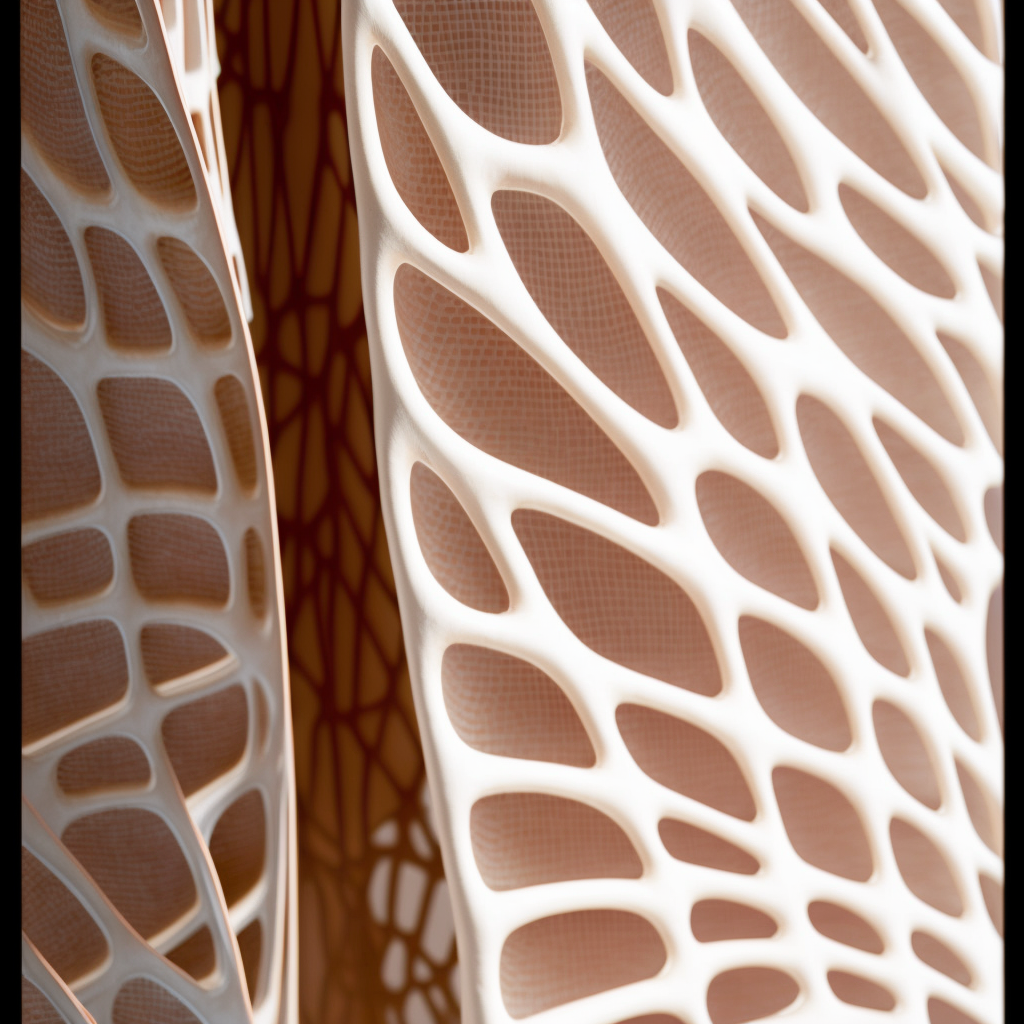
- The form of an object is the first thing we perceive. It is how we characterise things.
- Objects are independent of their environment. They don’t react to it, they don’t change.
- Objects are made from parts that are fixed in advance. There is no interplay between the systems level and the material level. Concrete is concrete no matter the temperature. Cotton, once woven, is cotton - whether you sweat into it, or use it as a warm blanket.
Material ecology is a movement that upends these principles. It directly subverts these ‘givens’.
- Materials as a fundamental aspect of design.
- Materials that are not static but interact with their environments.
- Materials that can organise themselves. Materials that are different under different conditions.
In other words, if a material can move, shift and change, the form is less important. As the form is not fixed. Designs move, shift and evolve based upon what’s going on around it. Material doesn’t have an upfront schema. Instead it processes itself into a form based on the events and conditions it finds itself in.
The best designs exist in nature. In this ancient canvas of living epoch-old experiments, we have much to learn and much to adapt.
And plenty to borrow and build upon.
Sources & Inspiration
- Material Ecology, Neri Oxman.